
What is AuDHD?
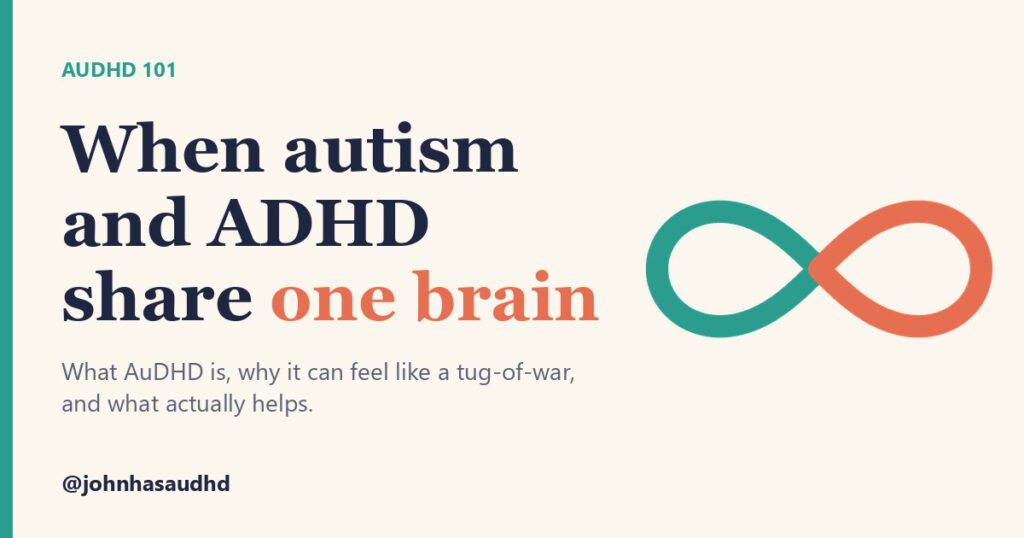
AuDHD is a community term for being both autistic and ADHD. It isn’t a separate diagnosis. It’s two neurotypes showing up together, and shaping how each other looks and feels.
The overlap is common: a large share of autistic people also have ADHD, and the other way round.
For a long time, autism and ADHD were treated as separate things, and many people were told they could only have one. In practice the two often travel together, and each changes how the other shows up. ADHD can make an autistic person look more outgoing and spontaneous than they feel. Autism can make an ADHD person look more organised than they are. That is why so many AuDHD adults spend years feeling like the usual descriptions of either condition only half fit.
The internal tug-of-war
Here is how the two compare:
| Autistic side | ADHD side |
|---|---|
| Needs routine | Gets bored of routine |
| Wants quiet | Craves stimulation |
| Deep, steady focus | Attention that jumps |
| Needs a plan | Loses the plan |
Both needs are real. Neither is wrong.
What it can look like
A few everyday examples:
- Starting a new hobby on impulse, then needing to learn it perfectly
- Being overwhelmed by noise, yet needing music to focus
- Planning your day in detail, then forgetting the plan exists
- Needing time alone, and feeling lonely at the same time
- Hyperfocusing for six hours, then being unable to start a five-minute task
Why it's often missed
- ADHD can hide autism: Chattiness and impulsivity can cover up autistic social differences.
- Autism can hide ADHD: A strong need for structure can compensate for ADHD disorganisation.
- One diagnosis, then the other: Many people are diagnosed with one and only discover the other years later.
What helps
- Routine with a menu: A fixed structure, with choices built in.
- A sensory toolkit: Headphones, fidgets, sunglasses. Ready before you need them.
- Body doubling: Work alongside someone, in person or online.
- Get it out of your head: Timers, visual reminders, checklists.
- Rest without guilt: Recovery is part of the plan, not a failure of it.
Where to start
If this sounds familiar, start by noticing the tug-of-war rather than fighting it. When you feel pulled in two directions, ask which need is louder today, and meet that one first. Small, flexible systems tend to work better than strict ones, because they leave room for both sides of your brain.
The bottom line
Neither half is the “real” you. Both are.
This post is for awareness, not diagnosis. If any of it resonates, talk to your GP or a qualified professional about an assessment.
Want the swipeable version? This post is also a carousel on Instagram: follow @johnhasaudhd for more on life with AuDHD.